

How do events sell out?
Download the free Event Momentum sell-out framework
Events sell out when demand is built through clear positioning, a defined audience, and consistent marketing that creates momentum over time. The most successful campaigns combine multiple channels, strong creative, and clear urgency to move people from awareness to action. Rather than relying on a single push, high-performing events are structured in phases that build interest, reinforce value, and encourage commitment.
The framework below outlines the key elements consistently present in high-performing events. It is based on practical campaign experience across corporate, cultural, and live event environments.
The 12 factors include:
Positioning
Audience insight
Narrative
Creative identity
Campaign phases
Channel mix
Hype strategy
Conversion assets
Email
Paid ads
Social proof
Urgency
This framework can help you:
Build anticipation before launch
Improve conversion from interest to attendance
Avoid common promotion mistakes
Apply a consistent structure across different types of events
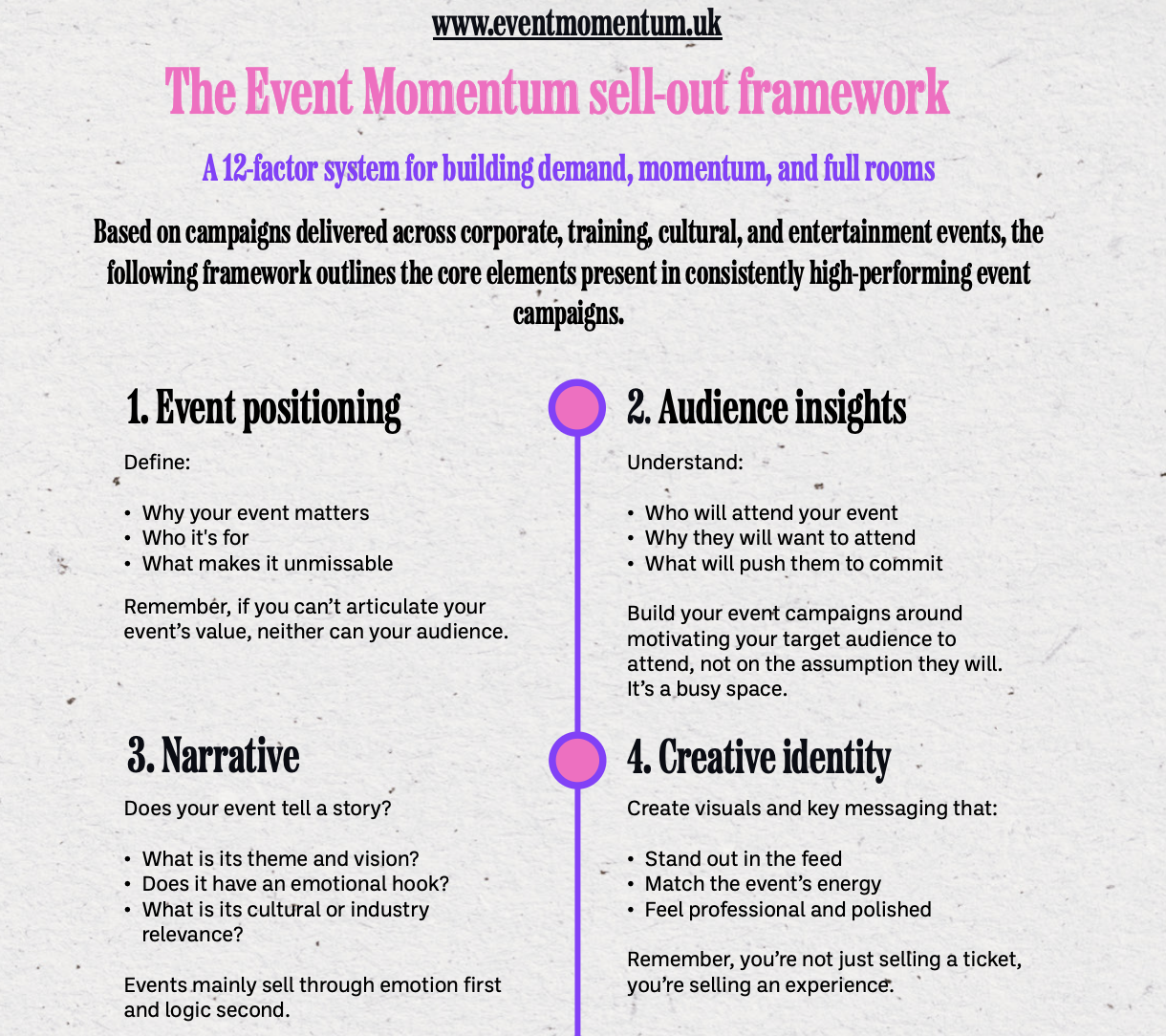
The sections below break down the key elements consistently present in high-performing event campaigns, each addressing a specific question.
-
Event positioning defines why an event matters, who it is for, and what makes it worth attending. When positioning is clear, audiences can quickly understand the value of the event. When it is unclear, it becomes difficult to generate interest or justify attendance, which reduces the likelihood of ticket sales.
-
Audience insights help shape messaging, channels, and timing. Events perform best when campaigns are built around what motivates people to attend, rather than assuming interest will naturally convert. Understanding your audience increases relevance and improves conversion rates.
-
Narrative gives an event meaning beyond its basic details. A strong narrative explains the theme, purpose, and relevance of the event, helping people connect with it emotionally. Events that feel meaningful and culturally or professionally relevant are more likely to attract attention and drive attendance.
-
Creative identity refers to the visual style and messaging used to promote an event. Strong creative helps an event stand out, reflect its energy, and appear professional. It plays a key role in capturing attention and reinforcing the overall perception of the event.
-
Most successful event campaigns follow structured phases, typically including teaser, launch, build-up, and final push. Each phase supports the next, helping to build awareness and momentum over time. Campaigns that follow a phased approach tend to perform more consistently than those relying on a single launch.
-
A channel mix ensures that an event reaches its audience in multiple ways. High-performing campaigns combine channels such as social media, email, paid advertising, partnerships, and PR. Using a mix of channels increases visibility and reinforces messaging, which improves overall campaign effectiveness.
-
A hype strategy is the planned build-up of excitement and anticipation before an event. This can include countdown content, behind-the-scenes updates, and speaker or line-up highlights. The goal is to create a sense of momentum and make the event feel unmissable.
-
Conversion assets are the elements that turn interest into action. These include a clear landing page, strong calls to action, persuasive copy, and a simple booking or registration process. Reducing friction in the user journey makes it easier for people to commit and complete their purchase.
-
Email is often one of the most effective channels for driving event attendance. It allows for direct communication, reminder sequences, and targeted messaging based on audience behaviour. When used properly, email supports both acquisition and retention throughout the campaign.
-
Paid advertising helps extend reach and accelerate momentum. It allows campaigns to target specific audiences with relevant creative and messaging. When aligned with other channels, paid ads reinforce visibility and increase the likelihood of conversion.
-
Social proof demonstrates that an event is credible and valued by others. This can include testimonials, previous attendance figures, photos, videos, or partner endorsements. People are more likely to attend when they see that others have already engaged with or trusted the event.
-
Urgency encourages people to act rather than delay. Techniques such as limited ticket availability, price increases, and countdown messaging create clear decision points. Without urgency, potential attendees are more likely to postpone or abandon the decision to attend.
What makes an event sell out?
Events sell out when demand builds over time through consistent marketing, clear positioning, and a sense of urgency. It is rarely one tactic, but a combination of factors working together.
Why do most events struggle to attract attendees?
Most events lack clear positioning, a defined audience, and consistent promotion. Without these, it is difficult to build momentum or create urgency.
How far in advance should you market an event?
Most successful events follow phased campaigns, including teaser, launch, build-up, and final push stages. This allows momentum to develop over time.
What is the most effective marketing channel for events?
There is no single best channel. High-performing campaigns use a mix of email, social media, paid advertising, and partnerships to reach and reinforce their audience.