


How great events sell out: The Event Momentum 12-factor framework
Most events don’t fail because of one catastrophic mistake. They struggle because several small but critical elements are missing or misaligned.
After years of delivering campaigns across corporate summits, training programmes, awards ceremonies, festivals, and club events, a consistent pattern emerges. Events that sell out share the same underlying structure - a combination of positioning, psychology, communication, and timing.
This structure forms the Event Momentum sell-out framework™, a practical model for building demand, sustaining interest, and converting attention into attendance across corporate, cultural, and commercial events.
What is the Event Momentum sell-out framework™?
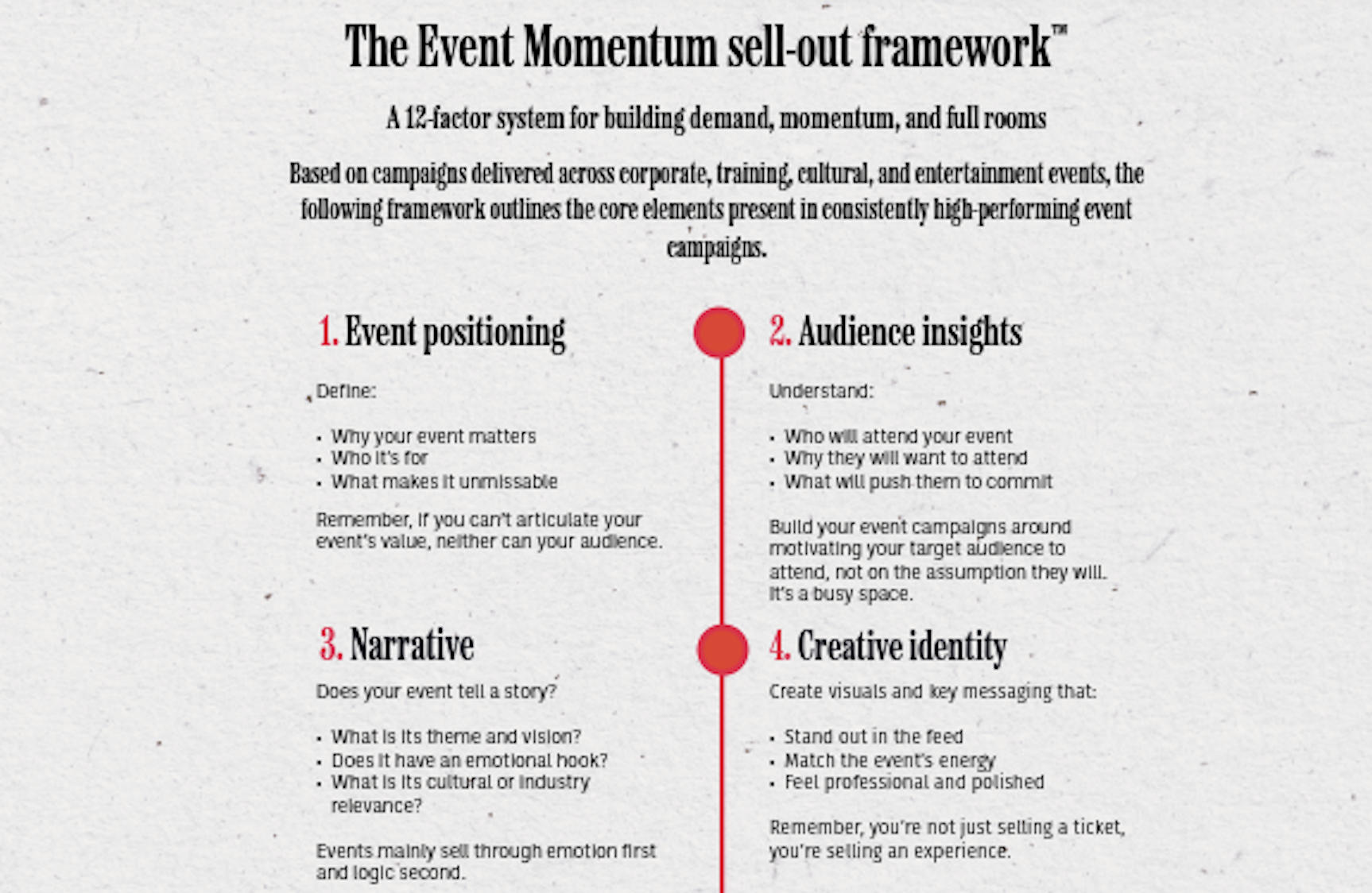
The Event Momentum sell-out framework™ is a 12-factor model that identifies the core elements of consistently high-performing event campaigns, from positioning and audience insights to urgency and final conversion.
Rather than focusing on individual marketing tactics, the framework explains how successful events create momentum through alignment. Sell-out campaigns typically combine strategic clarity, compelling messaging, multi-channel visibility, credibility signals, and time-sensitive incentives that move audiences from awareness to commitment. When several of these elements are missing, even well-promoted events can struggle to attract attendees.
The framework groups these drivers into three stages:
Foundation: making the event meaningful and relevant
Campaign engine: building sustained demand and visibility
Acceleration: converting interest into confirmed attendance
The 12 factors overview
Rather than viewing event promotion as a series of disconnected activities, this framework highlights the structural elements that work together to produce momentum.
Foundation: Make the event matter
Clear event positioning
Audience insights
Persuasive narrative
Strong creative identity
Before promotion begins, audiences must understand why the event matters and who it is for. Without this clarity, communication lacks impact.
Campaign engine: Build demand
Multi-phase campaign plan
Channel mix
Hype and anticipation strategy
Conversion-ready assets
Successful campaigns unfold over time, reinforcing awareness, credibility, and excitement through multiple touchpoints.
Acceleration: Turn interest into attendance
Email journey
Paid ads and retargeting
Social proof
Urgency and final push
As the event approaches, communication shifts from awareness to decision-making, reducing hesitation and encouraging commitment.
Why a framework matters
Most events are promoted through a collection of tactics, such as social posts, emails, and ads, without an underlying structure. A framework provides a diagnostic tool. It allows organisers to identify weak points, prioritise refinements, and build campaigns that create sustained momentum rather than short bursts of attention.
Whether you’re planning a corporate conference, awards programme, festival, or specialist training event, this framework provides a structured way to diagnose weaknesses and strengthen your campaign. Few events fail because of a lack of effort. Most fail because the (event) momentum was never built.
© eventmomentum.uk
About the founder
Event Momentum is led by Kevin McFarlane, an experienced digital and event marketing strategist with a background spanning magazine publishing, corporate digital strategy, paid social and live event promotion. Kevin has worked across corporate conferences, brand activations and cultural events, helping organisations build momentum by turning audience interest into real attendance through clearer storytelling and strategic promotion.