

Why event marketing becomes easier when the difficult decisions are made early
When conversations turn to event marketing, it's understandable that they quickly focus on the visible parts of a campaign. People want to talk about social media, email marketing, advertising, websites and content because those are the things audiences see. They're also the parts of a campaign that can be measured, reviewed and changed as the event approaches.
Yet, after working across conferences, exhibitions, awards, training programmes and live events, I've come to believe that the success or otherwise of a campaign is often determined long before any of those activities begin.
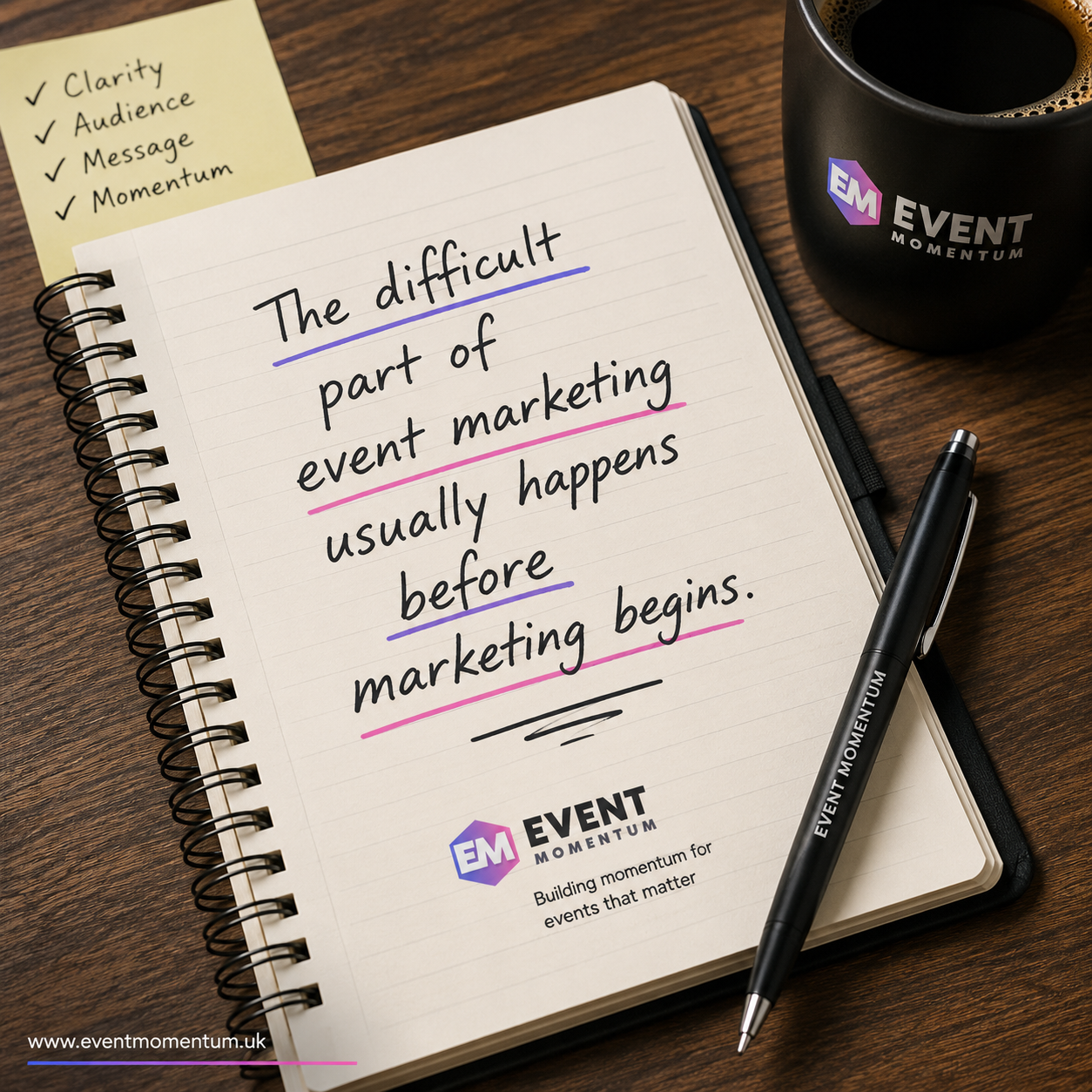
The difficult part of event marketing isn't usually producing content. It's deciding what that content is trying to communicate.
Every event organiser knows their event inside out. They've spent months planning the agenda, confirming speakers, securing exhibitors, managing budgets and solving countless practical challenges behind the scenes. Understandably, that familiarity can make it difficult to step back and view the event through the eyes of someone hearing about it for the first time.
Preparation is everything
Who is the event for and what problems does it solve?
That's where many campaigns begin to lose clarity. It's easy to slip into describing what's happening on the day because everyone organising the event already understands why it's important. The audience doesn't have that advantage. The audience is presented with information, but not always with enough context to understand why they should invest their time, attention or budget in attending.
Who is your target audience?
One thing I've noticed over the years is that the strongest campaigns usually begin by answering a few questions that sound simple on paper but are often surprisingly difficult to answer once you're sitting around a meeting table.
Who is this event really for?
What problem does it solve?
Why now?
What makes it different from the many other events competing for the same audience?
Those conversations aren't always straightforward because they force organisers to make choices. They require a degree of honesty about what the event is trying to achieve and who it is best placed to serve.
Once those decisions have been made, everything else becomes easier. Copywriting becomes more focused because everyone understands the central message. Content ideas emerge more naturally because they are all supporting the same story. Even advertising becomes more effective because it is reinforcing a proposition that already makes sense, rather than trying to compensate for one that doesn't.
One of the things I've noticed over the years is that organisations often assume marketing is there to solve strategic problems. Sometimes it can help, but more often its role is to communicate strategic decisions that have already been made. If those decisions are unclear, marketing inevitably works much harder than it needs to. That doesn’t just apply to event marketing.
Perhaps that's why the campaigns that seem effortless from the outside rarely feel effortless behind the scenes. They are usually the result of careful thinking at the beginning, where the difficult conversations happened early enough to give the marketing a clear direction. By the time the campaign launches, the team isn't trying to work out what to say. They're simply telling a story they've already agreed upon.
If you need support with your event, then please do contact us at info@eventmomentum.uk.
© eventmomentum.uk
Why is event marketing easier when you start with strategy?
A clear strategy gives every part of a campaign a purpose. Once you've agreed who the event is for, why it matters and what makes it different, writing content, planning emails and creating social media becomes much more straightforward because everything supports the same message.
What should event organisers decide before marketing begins?
Before creating a marketing campaign, organisers should define their audience, clarify the purpose of the event, understand what makes it distinctive and agree the main message they want people to remember. These decisions provide the foundation for every piece of marketing that follows.
Why do some event marketing campaigns struggle?
Many campaigns struggle because they focus on promotional activity before the strategic thinking is complete. When positioning and messaging aren't clear, marketing often works much harder than it needs to.
Is event marketing about promotion or planning?
Successful event marketing starts with planning. Promotion is important, but it becomes much more effective when it's built on clear positioning, audience understanding and consistent messaging.
About the founder
Event Momentum is led by Kevin McFarlane, an experienced digital and event marketing strategist with a background spanning magazine publishing, corporate digital strategy, paid social and live event promotion. Kevin has worked across corporate conferences, brand activations and cultural events, helping organisations build momentum by turning audience interest into real attendance through clearer storytelling and strategic promotion.