

How great events sell out: The Event Momentum sell-out framework
Most events don’t fail because of one catastrophic mistake. They struggle because several small but critical elements are missing or misaligned.
After years of delivering campaigns across corporate summits, training programmes, awards ceremonies, club nights, and live experiences, a consistent pattern emerges. Events that sell out share the same underlying structure - a combination of positioning, psychology, communication, and timing.
This structure forms the Event Momentum sell-out framework, a practical model for building demand, sustaining interest, and converting attention into attendance.
What makes an event sell out?
Events sell out when they combine clear positioning, strong audience insight, engaging messaging, sustained promotion, and urgency-driven conversion tactics into a coordinated campaign.
Attendance is rarely driven solely by awareness. People commit when they understand why an event matters, feel confident it will deliver value, and perceive that delaying a decision risks missing out. Successful campaigns build momentum over time, from early curiosity to emotional engagement to decisive action.
Key drivers of sold-out events:
Clear value proposition
Targeted audience focus
Strong creative identity
Multi-channel promotion
Consistent communication
Social proof and credibility
Limited availability and deadlines
Frictionless booking experience
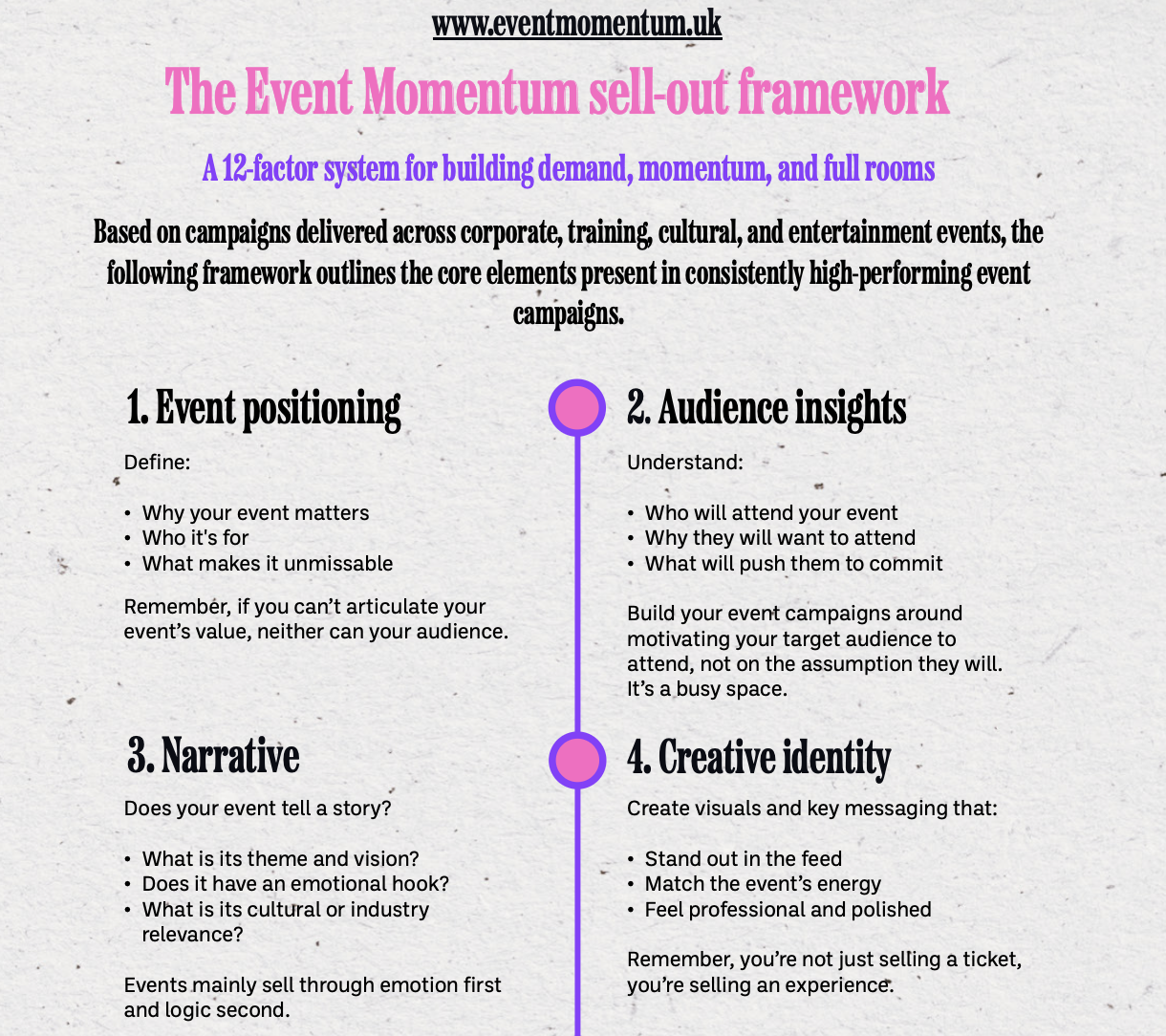
The Event Momentum sell-out framework
The framework outlines the 12 factors consistently present in high-performing event campaigns.
For a deeper understanding of the strategic factors behind high-performing campaigns, download the Event Momentum sell-out framework.
Foundation - make the event matter
1. Clear event positioning
Define:
Why the event exists
Who it is for
What makes it distinctive
Why attendance matters
If you can’t articulate value clearly, audiences cannot justify attending.
2. Audience insights
Understand motivations, barriers, and triggers.
Successful campaigns are built around what audiences need, not what organisers want to say.
3. Persuasive narrative
Events sell through the story before the schedule.
Ask:
What emotional hook exists?
What journey will attendees experience?
Why now?
4. Strong creative identity
Visuals and messaging must:
Stand out in crowded feeds
Reflect the event’s tone
Convey professionalism and credibility
You are selling an experience, not just a ticket.

Campaigns build demand
Marketing team planning an event campaign strategy.
5. Multi-phase campaign plan
Effective promotion unfolds in stages:
Teaser phase
Launch phase
Build-up phase
Final push
Momentum accumulates over time.
6. Channel mix
Relying on one channel is risky.
Use a combination of:
Social media
Email
Paid advertising
PR and partnerships
Community networks
7. Hype and anticipation strategy
Create reasons to pay attention:
Countdown content
Behind-the-scenes previews
Speaker or performer spotlights
Audience reactions
Anticipation drives desire.
8. Conversion-ready assets
Interest alone does not produce attendance.
You need:
Dedicated landing page
Persuasive copy
Clear call to action
Simple booking journey
Friction kills sales.

Acceleration - turn interest into attendance
Attendees at a sold-out event venue.
9. Email journey
Email remains one of the highest-converting channels.
Include:
Launch announcement
Reminder sequence
Final push messages
Retention communications
10. Paid ads and retargeting
Advertising amplifies momentum and keeps the event visible to interested audiences.
Budget should be phased across the campaign, not concentrated at launch.
11. Social proof
People trust what others already value.
Use:
Testimonials
Photos and videos
Previous success metrics
Partner endorsements
12. Urgency and final push
Every sell-out campaign uses scarcity signals:
Limited tickets messaging
Countdown timers
Price increases
“Last chance” announcements
Deadlines drive decisions.
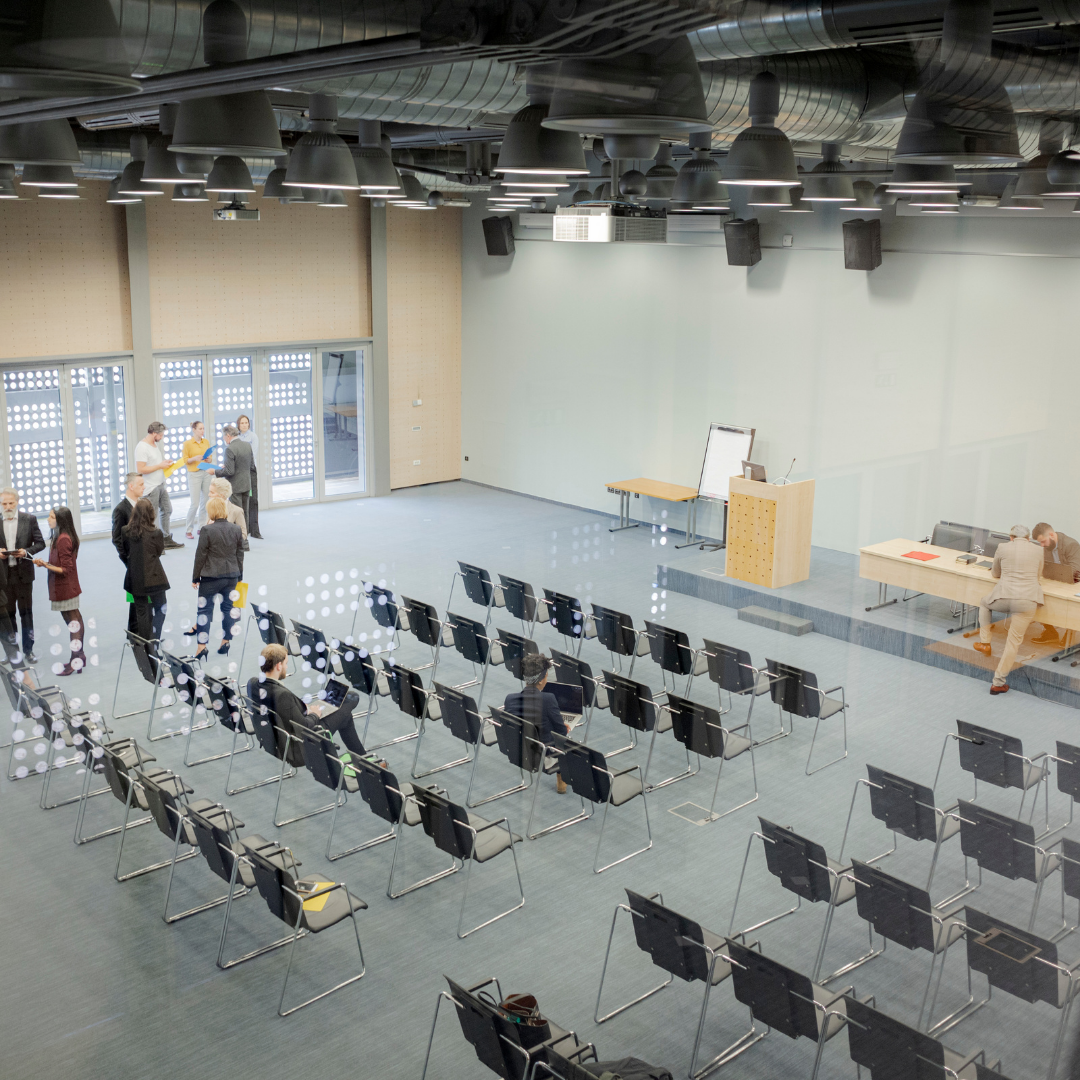
Why events fail to sell out
An near-empty conference room with a low attendance.
Most struggling events are missing several of these factors simultaneously. Effort is not the issue; alignment is.
Without positioning, promotion becomes noise; without urgency, interest is delayed, and without (event) momentum, awareness fades.
Applying the framework
Whether you’re planning a corporate conference, awards programme, festival, club event, or specialist training event, this model provides a structured way to diagnose weaknesses and strengthen your campaign.
Want a practical version?
Download the free Event Momentum sell-out checklist to evaluate your event against all 12 factors and identify areas for improvement.
© eventmomentum.uk
About the founder
Event Momentum is led by Kevin McFarlane, an experienced digital and event marketing strategist with a background spanning magazine publishing, corporate digital strategy, paid social and live event promotion. Kevin has worked across corporate conferences, brand activations and cultural events, helping organisations build momentum by turning audience interest into real attendance through clearer storytelling and strategic promotion.